Tell us about the job
Takes about a minute. No obligation.
A furnace repair in Norfolk starts with the system's own history. 71 severe weather events were recorded in Norfolk city, Virginia between 2015 and 2024. At that rate, severe weather is a steady background condition rather than a rare event, and it puts cumulative stress on heat exchangers, igniters, and blower motors over years of operation. But that same rate means a failed component is as likely to trace back to deferred maintenance or original installation quality as to weather load, and a contractor has to sort out which before the repair scope is clear.
Ductwork and wiring in a house this old were laid in for equipment that no longer exists, and the furnaces running in them now have their own age to answer for. Half the homes in Norfolk city, Virginia were built in 1964 or earlier (2020-2024 ACS 5-year). A contractor who opens a furnace in this market and finds a heat exchanger or a control board that has been out of production will spend time on sourcing before they can price a repair, and in some cases will come back with a recommendation to replace rather than fix because the part simply is not made anymore. That is not a failure of diagnosis; it is what the supply chain for equipment of this vintage produces.
The Parts of a Furnace a Contractor Checks First
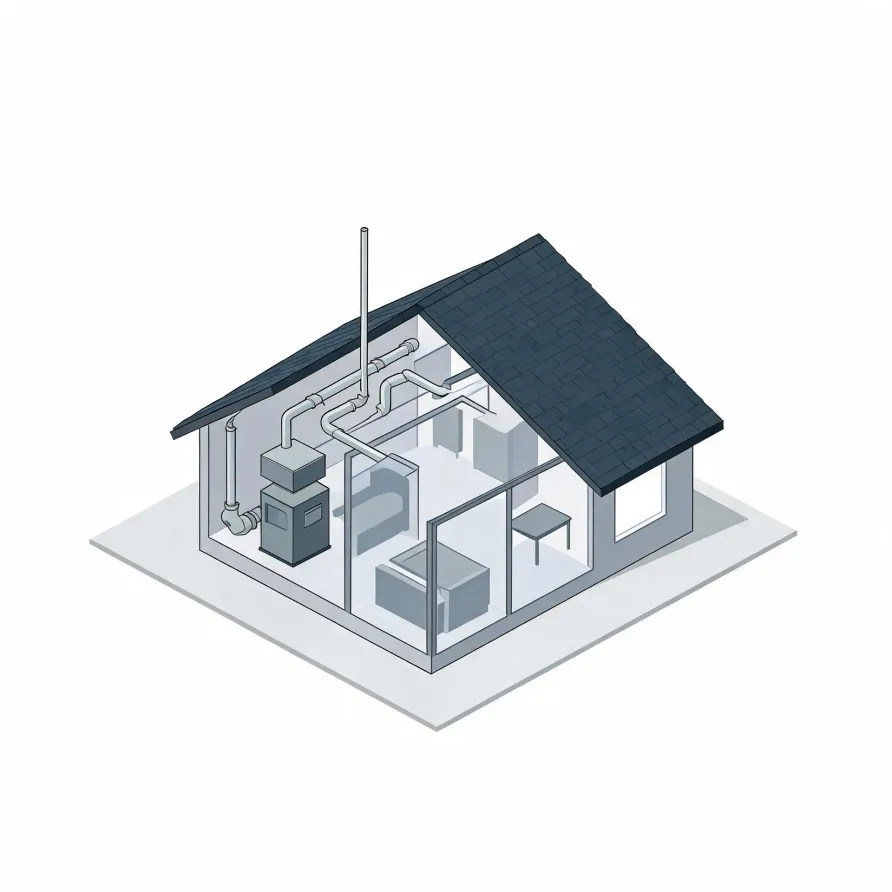
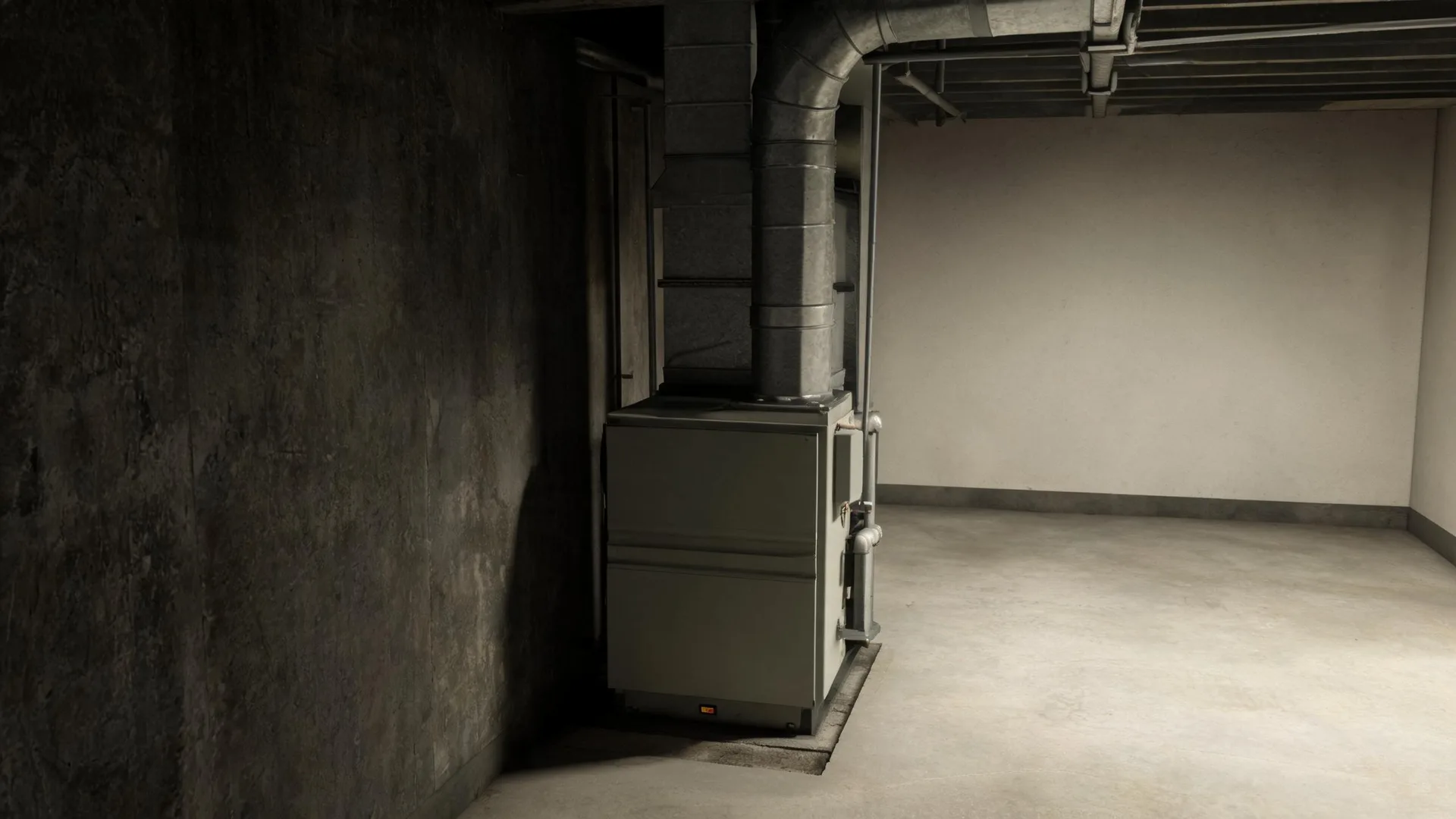
The furnace itself sits in a mechanical room, basement, or utility closet and is the unit that generates heat. Inside it, the heat exchanger is the piece a contractor looks at closely during a repair call. Cracks or failures there affect both heating and air quality, which is why it draws early attention.
The blower motor sits within the furnace cabinet and pushes conditioned air into the duct system. The flue or exhaust vent runs from the cabinet to the outside of the house, carrying combustion gases out. The thermostat, mounted on a wall in the living space, sends the signal that tells the furnace when to fire.
The drawing shows a typical layout, and a licensed contractor determines what applies to your specific house and equipment.
Get matched in Norfolk cityNorfolk by the Numbers
71 severe weather events were recorded in Norfolk city, Virginia between 2015 and 2024.
NOAA National Centers for Environmental Information, Storm Events Database, bulk CSV export, events 2015-01-01 through 2024-12-31.Half the homes in Norfolk city, Virginia were built in 1964 or earlier (2020-2024 ACS 5-year).
U.S. Census Bureau, 2020-2024 American Community Survey 5-Year EstimatesNorfolk city, Virginia holds 103,524 housing units (2020-2024 ACS 5-year).
U.S. Census Bureau, 2020-2024 American Community Survey 5-Year EstimatesOwners occupy 46.3% of the occupied homes in Norfolk city, Virginia (2020-2024 ACS 5-year).
U.S. Census Bureau, 2020-2024 American Community Survey 5-Year EstimatesFurnace Repair Rules & Codes for Norfolk city, Virginia6 sourced regulations and standards
What HVAC Repair Looks Like in Norfolk
Non-weatherized gas furnaces manufactured on or after November 19, 2015 must reach 80.0 percent AFUE.
Non-weatherized oil-fired furnaces manufactured on or after November 19, 2015 must reach 83.0 percent AFUE.
Mobile home gas furnaces manufactured on or after November 19, 2015 must reach 80.0 percent AFUE.
Non-weatherized gas furnaces manufactured on or after December 18, 2028 must reach 95.0 percent AFUE, up from the 80.0 percent minimum that applies to units manufactured before that date.
Licensing Rules for Contractors in Norfolk city, Virginia
Virginia’s contractor licence classes start above $1,000: the entry class covers a single contract or project over $1,000 but less than $30,000, or less than $250,000 of work in any 12-month period, with larger classes above that.
Virginia requires a contractor licence: no person may engage in, or offer to engage in, contracting work in the Commonwealth without one.
Severe Weather Events in Norfolk city
Weather puts real hours on heating equipment. Every hard weather event in Norfolk strains the systems that keep homes livable, and that strain shows up later as repair calls.
71 severe weather events, 2015–2024. Source: NOAA National Centers for Environmental Information, Storm Events Database.