Tell us about the job
Takes about a minute. No obligation.
Sizing a furnace for a home in Albemarle County starts with what the climate here demands, and that demand is real. 322 severe weather events were recorded in Albemarle County, Virginia between 2015 and 2024. At that rate, severe weather is part of the normal operating life of any system in this county, which means a contractor has to account for genuine thermal load before settling on equipment. A unit sized to a national average rather than local conditions will cycle harder and wear sooner. The quality of the install matters for the same reason: ductwork, sealing, and airflow specifications that would pass in a milder area can leave a system undersized in practice before the first winter ends.
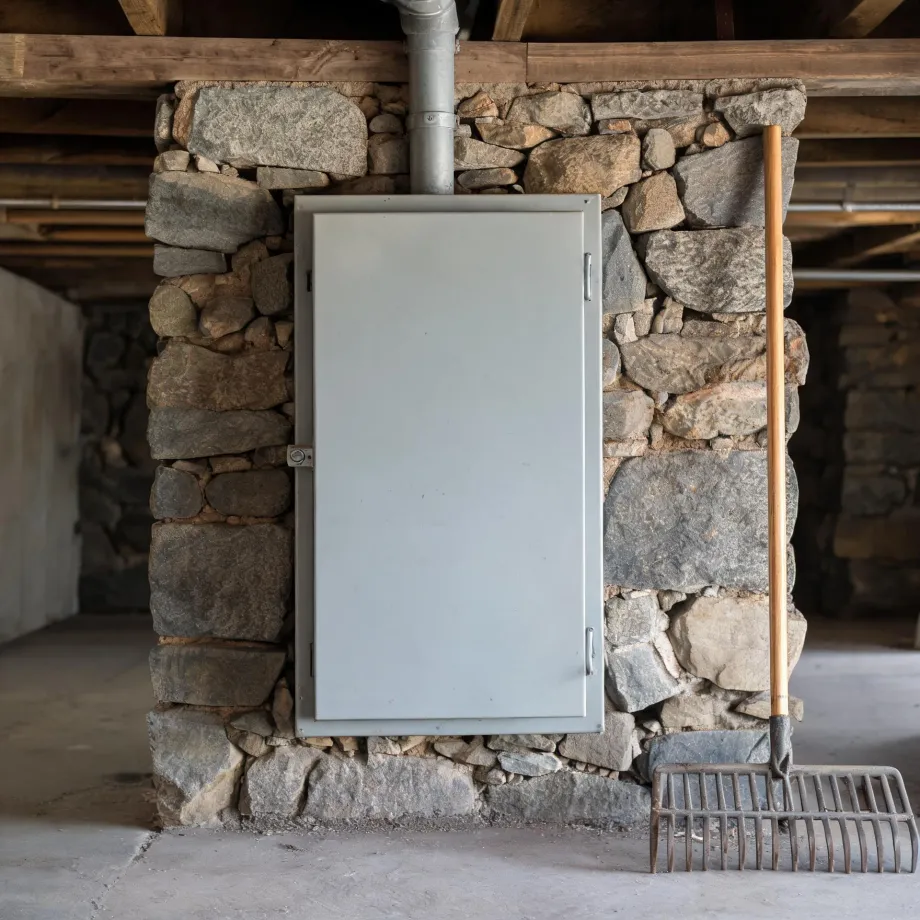
Ductwork laid down for an older furnace carries assumptions about airflow, branch sizing, and return placement that a modern unit may not share. Half the homes in Albemarle County, Virginia were built in 1992 or earlier (2020-2024 ACS 5-year). That gap between what the house was built around and what a contractor is putting in now is where a furnace installation either stays on budget or does not. A contractor working here measures what is already in the walls before settling on equipment, because the duct layout can force changes the equipment selection alone never would.
What a Furnace Installation Puts in Your Home
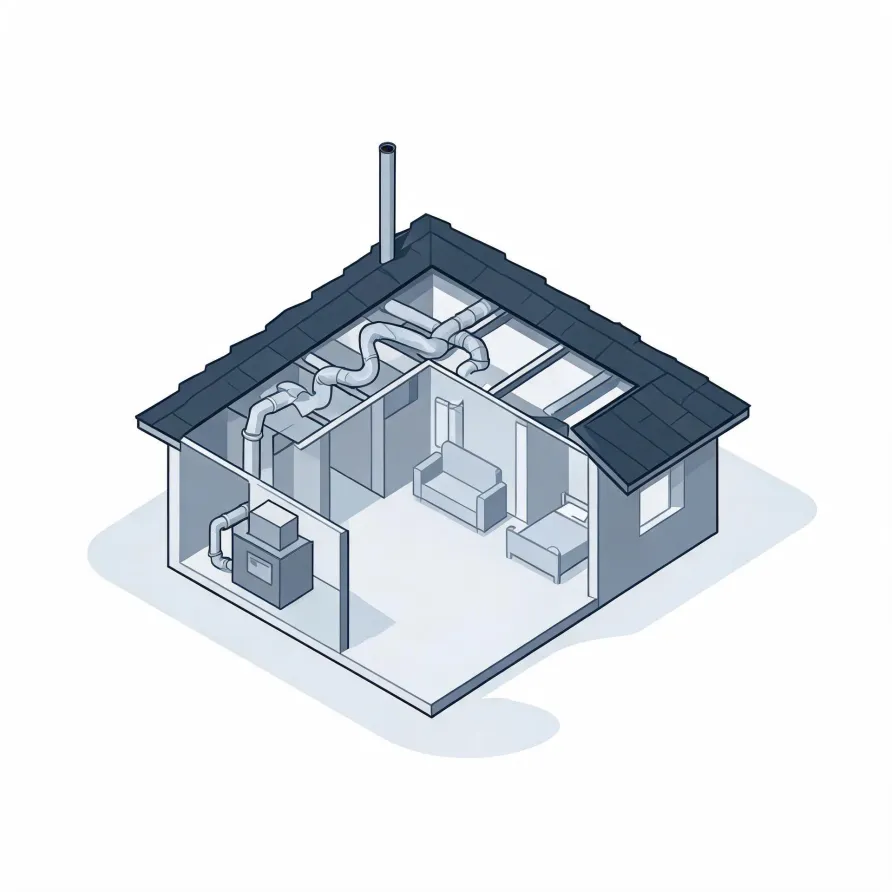
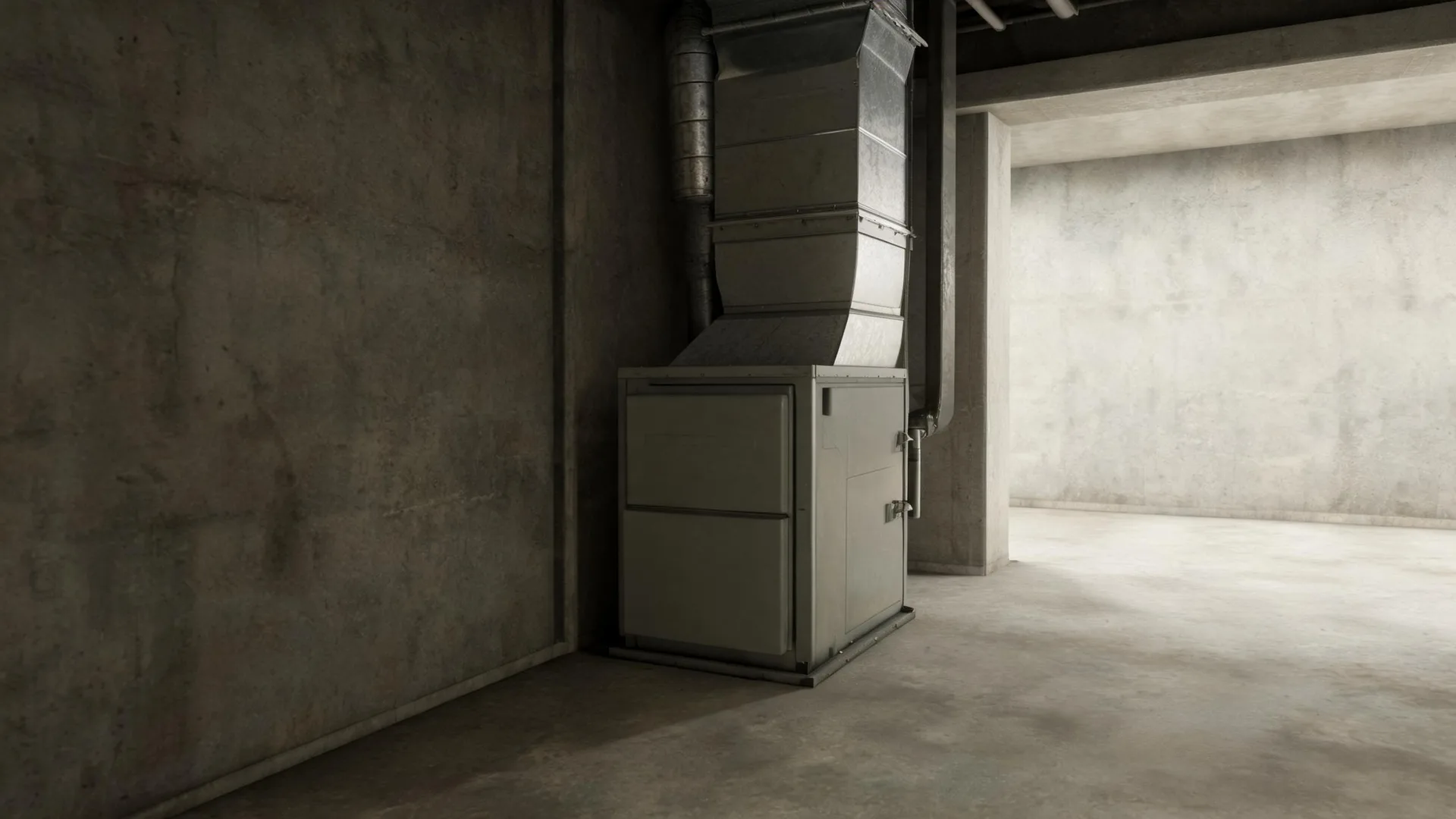
The furnace itself sits inside the house, most often in a basement, utility closet, or crawl space. It holds the heat exchanger and the blower, which together warm the air and push it through the house. The thermostat goes on an interior wall and gives the homeowner direct control over when the system runs.
A flue pipe runs from the furnace to the outside, carrying combustion gases away from the living space. Alongside that, a contractor fits the filter housing where the return air enters the unit, and connects the gas line that feeds the burner.
The drawing shows a typical layout, and a licensed contractor determines exactly what applies to your house.
Get matched in Albemarle CountyAlbemarle County, by the numbers
322 severe weather events were recorded in Albemarle County, Virginia between 2015 and 2024.
NOAA National Centers for Environmental Information, Storm Events Database, bulk CSV export, events 2015-01-01 through 2024-12-31.Half the homes in Albemarle County, Virginia were built in 1992 or earlier (2020-2024 ACS 5-year).
U.S. Census Bureau, 2020-2024 American Community Survey 5-Year EstimatesAlbemarle County, Virginia holds 49,159 housing units (2020-2024 ACS 5-year).
U.S. Census Bureau, 2020-2024 American Community Survey 5-Year EstimatesOwners occupy 65.9% of the occupied homes in Albemarle County, Virginia (2020-2024 ACS 5-year).
U.S. Census Bureau, 2020-2024 American Community Survey 5-Year EstimatesFurnace Installation Rules for Albemarle County, Virginia6 codes & standards
What the installation actually looks like
Non-weatherized gas furnaces manufactured on or after November 19, 2015 must reach 80.0 percent AFUE.
Non-weatherized oil-fired furnaces manufactured on or after November 19, 2015 must reach 83.0 percent AFUE.
Mobile home gas furnaces manufactured on or after November 19, 2015 must reach 80.0 percent AFUE.
Non-weatherized gas furnaces manufactured on or after December 18, 2028 must reach 95.0 percent AFUE, up from the 80.0 percent minimum that applies to units manufactured before that date.
What Albemarle County and Virginia Require for This Work
Virginia’s contractor licence classes start above $1,000: the entry class covers a single contract or project over $1,000 but less than $30,000, or less than $250,000 of work in any 12-month period, with larger classes above that.
Virginia requires a contractor licence: no person may engage in, or offer to engage in, contracting work in the Commonwealth without one.
Severe Weather Events in Albemarle County
Local weather puts a measurable load on heating equipment, and how hard a furnace works over its life is a function of what the climate demands from it. That makes the weather record for this area part of the practical case for sizing and installing the right equipment here.
322 severe weather events, 2015–2024. Source: NOAA National Centers for Environmental Information, Storm Events Database.